 Skip to content

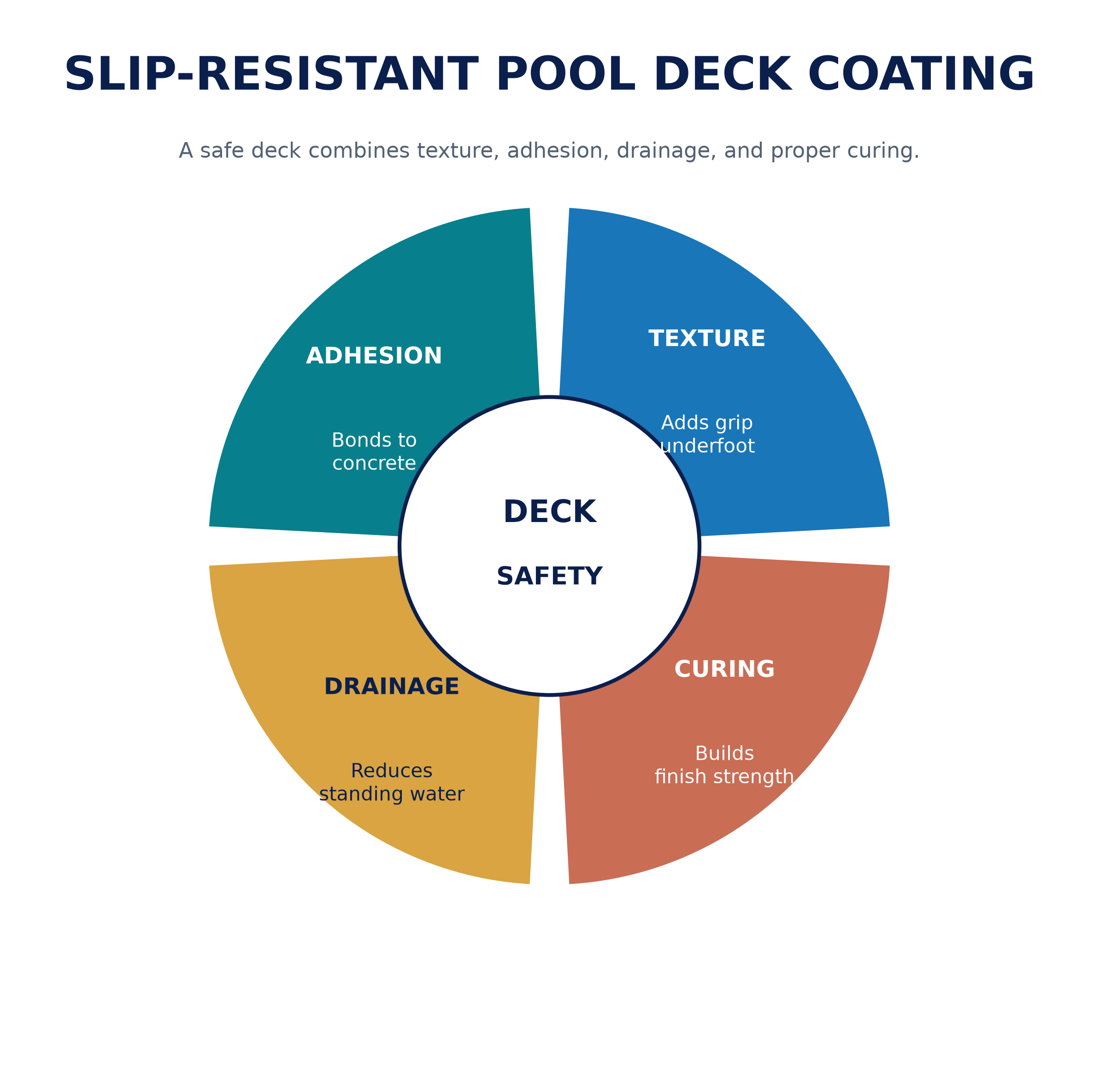
The best slip-resistant pool deck coating for Florida is a UV-stable polyaspartic system finished with a broadcast flake texture. It grips wet feet, resists fading and chlorine, and stays cooler underfoot than bare or dark concrete. That combination is what handles heat, water, and sun all at once.
If your pool deck turns into a skating rink when wet, or scorches your feet by noon, you know the two biggest headaches of hot Florida summers. The good news is that the best slip-resistant pool deck coating for Florida fixes both at once. It solves slip and heat together, and it lasts for years.
That is exactly what the right system is built for. Our pool deck coating uses a UV-stable polyaspartic topcoat over a textured, flaked surface, so it stays safe and good-looking through Florida’s worst. It is a favorite with Tampa Bay pool owners for a reason.
The Best Slip-Resistant Pool Deck Coating for Florida
So what actually wins in this climate? The best pool deck coating for Florida is a polyaspartic system with a textured, flaked surface, not epoxy or deck paint. A UV-stable polyaspartic coating handles the sun, while the flake handles the grip.
Here is what separates a deck that lasts from one that fails by year two:
- A slip-resistant texture created by broadcast flake, not a slick sealer.
- Custom color and flake options in light tones that reflect heat.
- Chlorine and chemical resistant chemistry that ignores splashout.
- A fast, professional installation that seals the surface properly.
- A long, honest warranty that backs the whole system.
Why Florida Pool Decks Need Slip Resistance
Florida is uniquely hard on pool decks, so a slip-resistant pool deck coating is not a luxury here. Safety around the pool comes first, especially with kids and wet feet in the mix. Here is what your deck is up against.
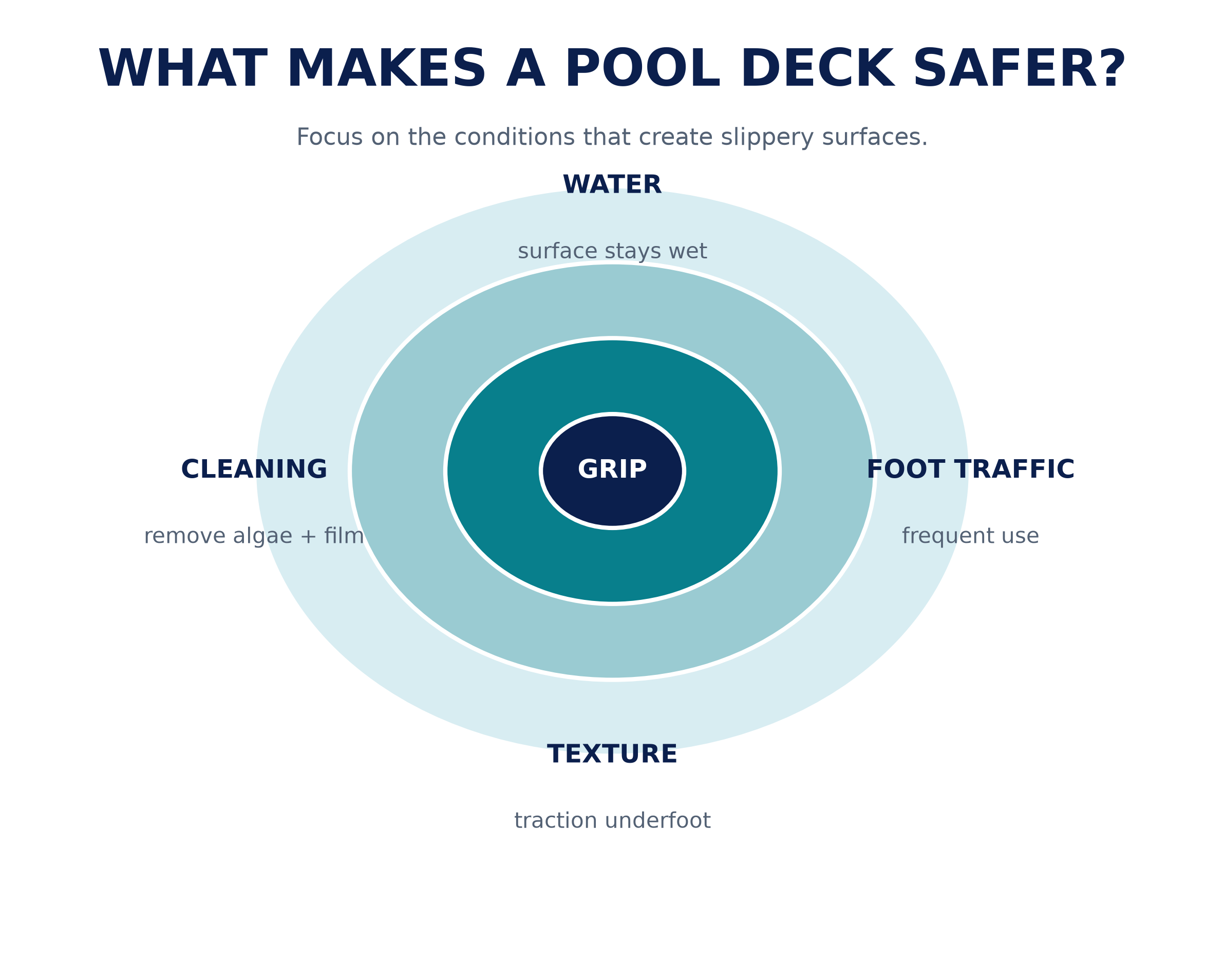
- A thin film of water on smooth concrete destroys wet surface traction almost instantly.
- Bare, wet feet moving fast between the pool and the lounge chairs.
- Relentless UV that bleaches color out of ordinary sealers.
- Pool chemicals and salt that eat away at cheap finishes.
- Afternoon heat that leaves bare concrete too hot to cross.
What Makes a Coating Slip-Resistant
Slip resistance is not magic; it is texture. An anti-slip finish works by adding tiny, consistent high points that give the surface grip, so water drains into the low spots instead of forming a slick film. Bare feet feel a subtle tooth, not sandpaper.
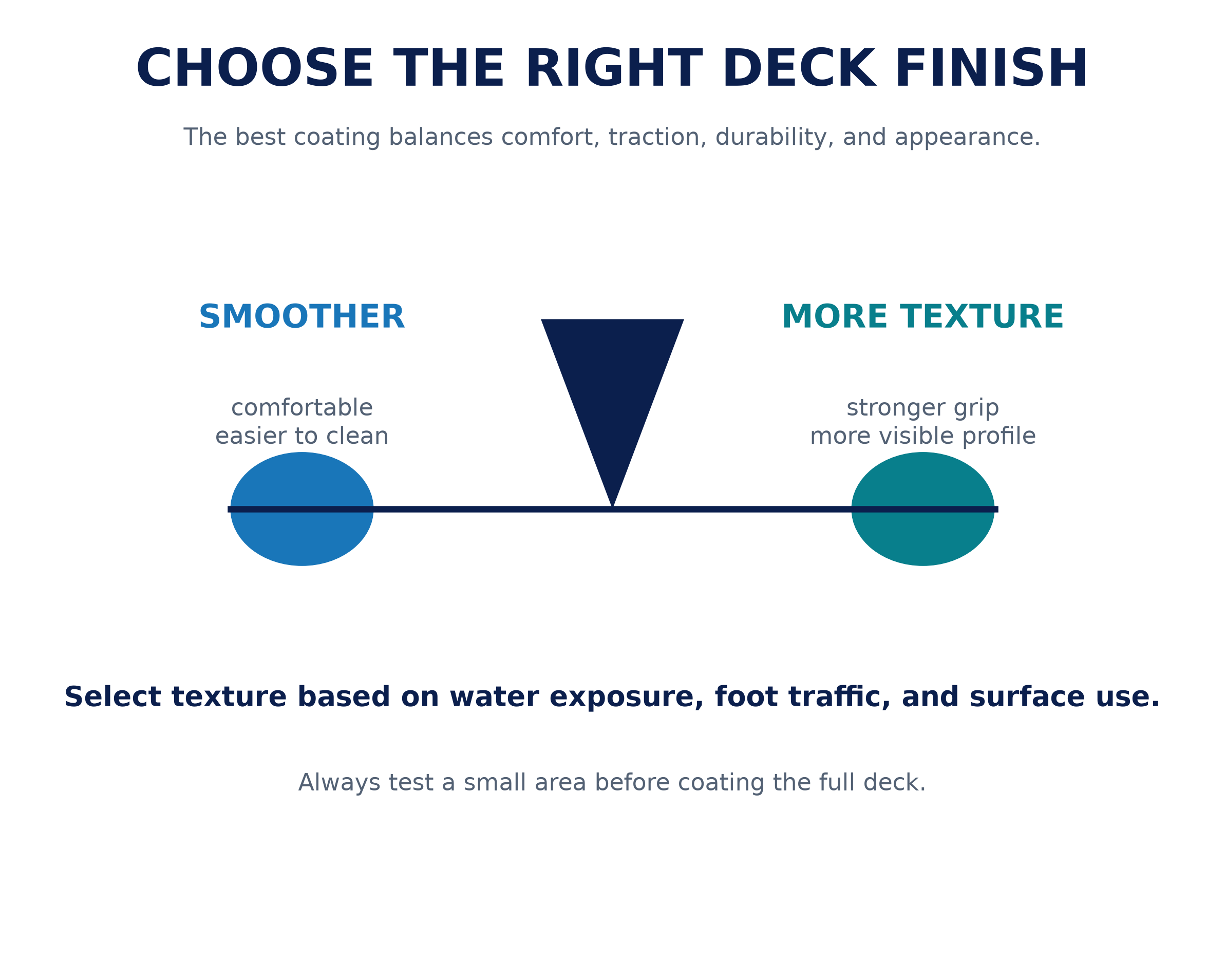
On a quality pool deck, that texture comes from broadcast flake. A decorative flake finish is scattered into the wet coating and locked under a topcoat, building traction that is part of the system rather than a spray-on grit that wears off. The result grips even when wet.
The science is simple and well documented. Adding controlled texture is the proven way to create non-slip surfaces outdoors, and a flaked polyaspartic does it far better than paint and sand. It is engineered traction, built to last.
Polyaspartic vs. Epoxy for Pool Decks
People often ask whether epoxy or polyaspartic is better outdoors. For a Florida pool deck, polyaspartic wins on the things that matter here. Epoxy is tough, but it has real weaknesses in this environment.
The gap comes down to sun and speed. Epoxy tends to yellow and chalk under UV, while polyaspartic, a type of polyurea, stays color-stable and cures fast enough to walk on the same day. Both epoxy and polyaspartic systems have their place, but only one is built for direct Florida sun.
There is more nuance if you want it. Our breakdown of epoxy vs. polyaspartic explains why polyaspartic pulls ahead on UV, cure time, and lifespan. For a pool deck, that difference is the whole ballgame.
Staying Cool Underfoot in the Florida Sun
Heat is the other half of the problem. Dark or bare concrete soaks up sun and radiates it back, which is why decks get painful by midafternoon. Color and coating choice change that.
Lighter shades reflect more sunlight, so a light polyaspartic deck stays a cool-to-the-touch surface far longer than dark pavers or plain slab. The coating also spreads heat more evenly instead of creating scorching hot spots. Your feet notice the difference immediately, and the finish stays heat and humidity resistant year-round.
Cooler decks are also better-looking decks. A crisp, flaked finish boosts backyard appeal and ties the whole pool area together. It is why pool owners around Riverview, Brandon, and Wesley Chapel keep calling us.
Durability: UV, Heat, and Moisture Resistance
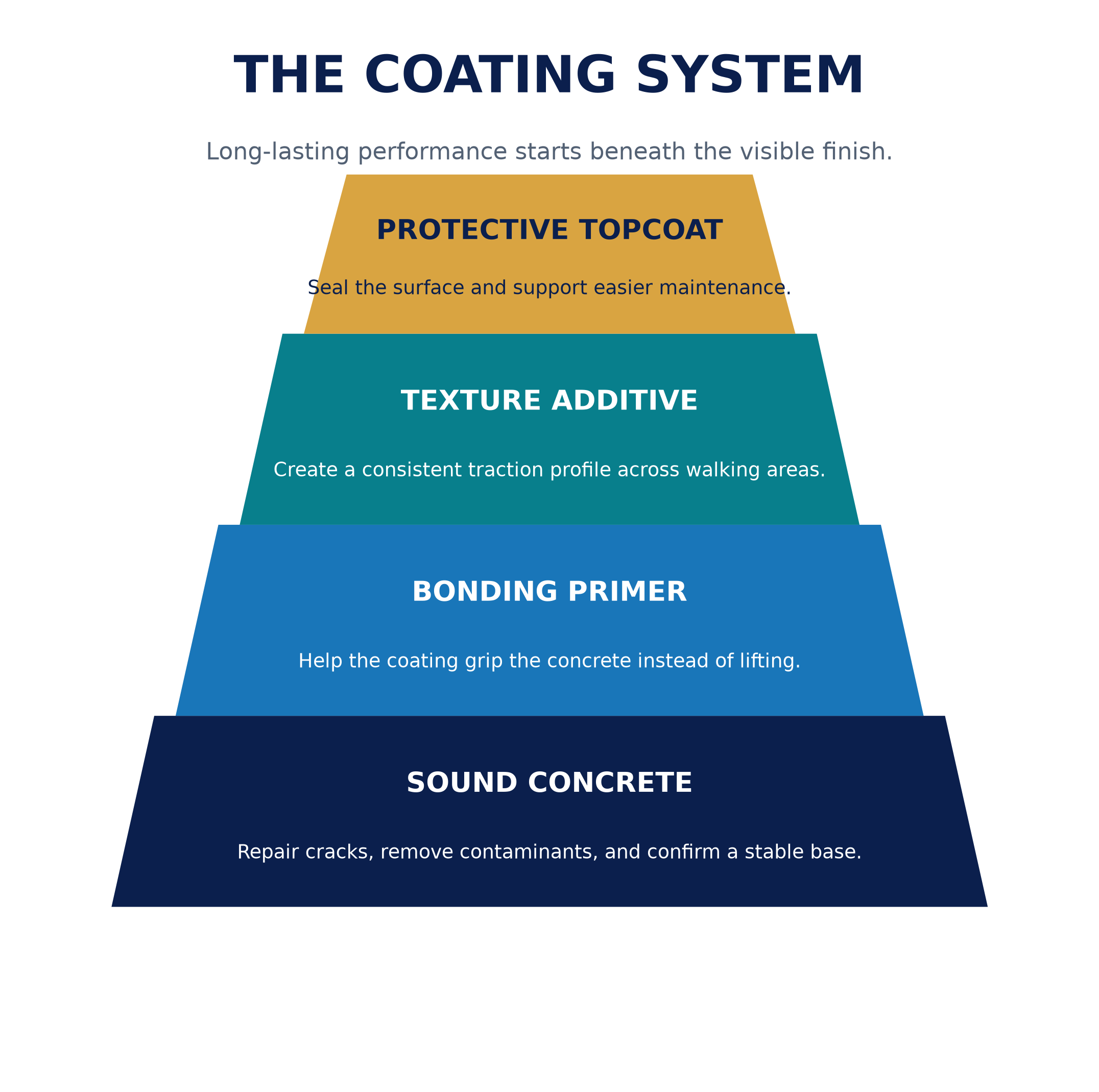
Durability starts with prep, not paint. Whether you need a fresh finish or full concrete pool deck resurfacing, the groundwork is the same. Proper surface preparation and grinding opens the concrete so the coating bonds and will not lift later.
From there, the system goes down fast. A fast-curing coating keeps the whole job moving. That enables a true one-day installation, so you are back poolside the next morning.
Once cured, the finish is made for this climate. It resists fading and yellowing under harsh UV. And it will not peel or crack the way sealers and deck paint eventually do.
Get a Slip-Resistant Pool Deck Coating in Tampa
You do not have to live with a slick, scorching deck. A professionally installed pool deck coating Tampa homeowners trust, from Plant City to the greater Tampa Bay area, turns the most dangerous surface in the backyard into the safest. And it looks like a resort while doing it.
Our certified installers handle everything from grinding to the final flake broadcast. The whole system is backed by a 15-year warranty. That is a durable, long-lasting finish you can stop worrying about.
If you want the best slip-resistant pool deck coating for Florida on your own deck, the next step is easy. Book a free quote and consultation, and we will walk your deck with no obligation. You can request a free estimate today and cool off on a safer deck this summer.
Frequently Asked Questions
What is the best coating for a Florida pool deck?
A UV-stable polyaspartic system with a broadcast-flake texture. It stays slip-resistant when wet, resists fading and chlorine, and handles the heat better than epoxy or plain concrete.
Is polyaspartic really better than epoxy outdoors?
For Florida sun, yes. Epoxy can yellow and chalk under UV and cures slowly, while polyaspartic stays color-stable and cures fast enough for a one-day install.
How does the coating stay cool underfoot?
Lighter colors reflect more sunlight, so a light flaked deck runs cooler than dark pavers or bare slab. It will not eliminate heat entirely, but the difference on bare feet is real.
Will it hold up to pool chemicals and moisture?
Yes. A quality polyaspartic finish is chemical resistant and easy to clean and maintain, shrugging off the chlorine, salt, and humidity that wear down cheaper coatings.
How long does installation take, and how long does it last?
Most residential pool decks are coated in a single day, and a professionally installed system is built to last for many years, backed by warranty.
What does a pool deck coating cost?
It depends on your deck’s size, its condition, and the finish you choose, so the honest answer comes from an on-site look. A free quote gives you an exact number with no guesswork.


